
01Introduction
Erectile dysfunction is a sensitive topic, and it is one of the most common health concerns men face. It can have several contributing causes, which is why an evaluation comes before any treatment decision.
In recent years, a non-invasive, in-office treatment called Shockwave Therapy has drawn growing interest from patients who want to discuss options beyond daily pills or more invasive procedures. It is not appropriate for every patient, and research and treatment protocols continue to evolve.
For details about how the treatment is offered at our practice, see our Shockwave Therapy for ED treatment page, or read more about erectile dysfunction and how it is evaluated.
This guide walks through what the therapy involves, who may be considered, and what to expect if you decide to talk with a urologist about it, in plain, non-clinical language.
02Understanding Erectile Dysfunction
Erectile dysfunction (ED) is the ongoing difficulty getting or maintaining an erection firm enough for satisfying intimacy. It is not defined by an occasional off night. Those are normal.
What matters is a pattern that begins to affect confidence, relationships, or well-being. ED is also frequently one of the earliest visible signs of vascular change in the body, which is why urologists take it seriously even when the concern feels more personal than medical.
03Common Causes of ED
ED usually has more than one cause. A thoughtful evaluation looks at the full picture rather than treating a symptom in isolation. Contributing factors often include:
- Reduced blood flow to the penile arteries (vascular)
- High blood pressure, diabetes, or elevated cholesterol
- Low testosterone or hormonal imbalance
- Nerve-related conditions or prior pelvic surgery
- Stress, anxiety, sleep loss, and relationship strain
- Certain medications and lifestyle factors
“Erectile dysfunction is rarely just one problem — and it is almost never a personal failing. It is a medical signal worth listening to.”
04What Is Shockwave Therapy?
Low-intensity shockwave therapy (sometimes called Li-ESWT) uses gentle acoustic pulses delivered to specific areas along the penis. The pulses are not electrical, and no needles, medication, or incision are involved.
The therapy is studied as a way to support microcirculation in appropriately selected patients. Unlike oral medication taken before intimacy, it is a device-based approach delivered as a short series of in-office sessions.
05Shockwave Therapy and Blood Flow
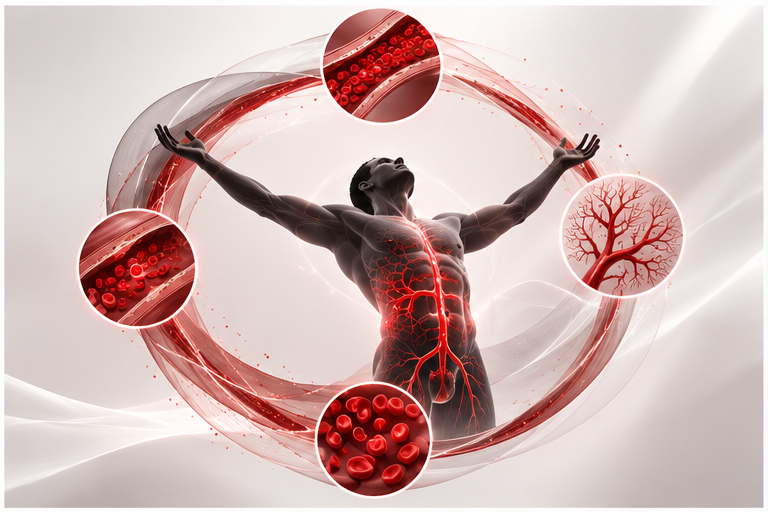
Healthy erections depend on healthy circulation. When small blood vessels lose responsiveness from age, vascular disease, or years of quiet strain, erections weaken even when desire and hormones are normal.
Shockwave Therapy is a non-invasive, device-based treatment that has been studied for its possible effect on circulation in selected patients.
Research has focused primarily on men whose erectile dysfunction appears to have a vascular component, particularly milder disease. Individual response varies, and treatment suitability should be determined after a urologic evaluation.
06Potential Benefits and Limitations
Patients often ask what the practical differences are compared with other options. The points below describe the format of the treatment rather than promised outcomes.
- Non-surgical and drug-free
- Performed in-office, without anesthesia
- No downtime — most patients resume daily activities the same day
- Studied for its possible effect on vascular function in selected patients
- Short, straightforward treatment sessions
- Not appropriate for every patient, and not a replacement for established therapies
- Response varies between patients, and long-term durability is still being studied
| Approach | Oral Medication | Shockwave Therapy |
|---|---|---|
| Use | Taken before intimacy | Series of short in-office sessions |
| Type | On-demand | Device-based, non-drug approach |
| Downtime | None | None |
| Goal | Manage symptom | May support vascular function in selected patients |
07Who May Be Considered?
Research has focused mainly on men with mild-to-moderate ED where reduced blood flow appears to be a contributing factor. It is not appropriate for every patient or every cause of ED, and candidacy is decided individually after an evaluation. Hormonal contributors such as low testosterone are also assessed, because they can affect which treatment makes sense.
Your urologist may discuss this option with you if you:
- Have mild-to-moderate ED tied to vascular changes
- Prefer a non-drug, non-surgical option
- Have not had strong or lasting results from oral medications
- Are in generally good overall health
- Want to discuss a non-drug option whose benefits and durability are still being studied
08What to Expect During Treatment
Sessions are brief and designed to fit into a normal day. A typical visit follows a simple sequence:
- 1
Consultation
A one-on-one conversation and focused evaluation to determine whether the therapy may be appropriate for you.
- 2
Preparation
You rest comfortably in a treatment room. No anesthesia or medication is required.
- 3
Treatment
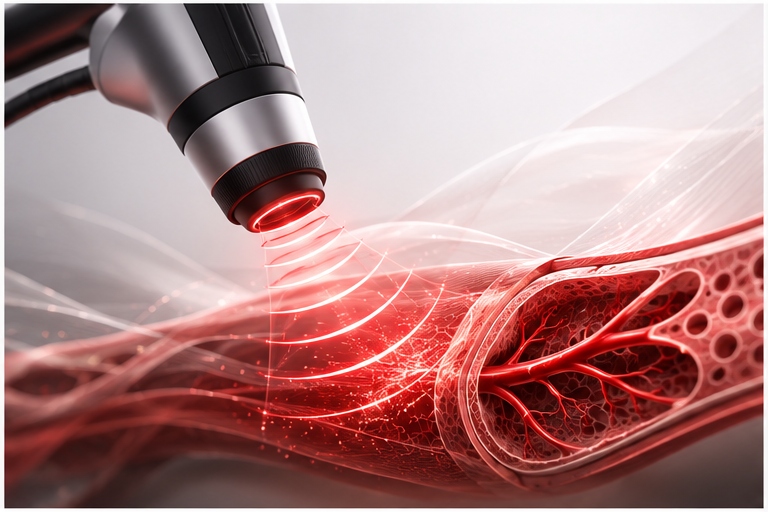
A hand-held device delivers gentle acoustic pulses to targeted areas over roughly 15–20 minutes.
- 4
Return to Life
You walk out and resume your normal day — including work and exercise — immediately.
09What Research Suggests About Results
Studies have evaluated erectile function over periods ranging from several weeks to several months after treatment. Results can vary, and researchers continue to study which patients are more likely to benefit and how durable any benefit may be.
Because outcomes depend on your baseline health and the contributing causes of your ED, your provider will discuss potential benefits, limitations and realistic expectations before anything is scheduled.
Where vascular change is a contributing factor, this approach may be considered as one part of a broader plan that also addresses lifestyle, cardiovascular health and, when appropriate, other therapies.
10Talking About ED
ED rarely stays confined to one part of life. Left unspoken, it can quietly reshape how someone sees themselves, and how connected they feel in an intimate relationship.
Starting the conversation is usually the first step. Care at PSUMG begins with a focused evaluation with Dr. Madhumitha Reddy, D.O. or Brian Willis, N.P., and treatment recommendations are individualized from there.
Talk with a specialist
Ready to Talk to a Urologist?
Our experienced urology team is here to answer your questions and help discuss whether Shockwave Therapy may be appropriate for you after an evaluation.
FAQ